Character Spotlight: Elvira Brown

She’s been dead since 1945, and she still has opinions about the wallpaper.
I get asked a lot whether Bitterport is a scary place. It isn’t. Not in the way people mean when they ask. But it is haunted, and if you’re going to meet one resident of Millmerran House before any other, it should be Elvira.
She died in 1945. She has been waiting, patiently and then not-so-patiently, ever since. And when Aiden Bellingan inherited a crumbling Victorian mansion and thought his biggest problem would be finding a decent contractor, Elvira had other plans for him.
What she wants
Justice, mostly. Eighty years is a long time to wait for someone to notice you were murdered. Elvira isn’t interested in scaring anyone out of the house, she’s interested in someone finally listening. That’s the thing about her that I think readers respond to. She isn’t a jump-scare. She’s a woman who ran out of time to finish something, and she is done being patient about it.
What she’s like to be haunted by
Direct. Extremely direct. Eighty years of watching the living stumble around making bad decisions will do that to a person — living or otherwise. She doesn’t worry about social conventions anymore, which means she’ll tell Aiden exactly what she thinks of his renovation choices, whether he asked or not. She is, by a wide margin, the most opinionated interior consultant Millmerran House has ever had, and she isn’t charging for it.
She’s also — and this surprised me while I was writing her — genuinely helpful. She points Aiden and Marielle toward clues. She nudges. She’s spent decades in that house; she knows where the bodies are buried, so to speak, and she’s tired of being the only one who does.
Why I didn’t write her as a scare
This is the part of Bitterport I care about most. I don’t write horror — I write healing stories that happen to involve ghosts. Elvira isn’t a warning or a threat. She’s a woman with unfinished business, and the mystery only resolves when someone finally gives her the thing she’s been asking for the whole time: to be heard.
Every restless spirit in Bitterport wants the same thing. Every crumbling house has a story it’s been waiting to tell. Elvira just happens to be the loudest about it.
Murder at Millmerran House is available now wherever you get your books. Come meet Elvira for yourself — just don’t touch the wallpaper without asking her first.
Letters From Bitterport
Heads Up!

My dear George,
Something is wrong in Bitterport.
I cannot tell you precisely what. My information is fragmentary and my sources are not what they were when we were younger. But I want you to be careful. More careful than usual. There are some in that town that do not want these properties to change hands, and those interests have not grown more reasonable with time.
You might wonder who could possibly object to elderly ladies giving away crumbling buildings to people who need them, and I understand the logic. But you and I both know that Bitterport’s darkness is not merely historical. It did not die with my grandfather. Some of it persists. Some of it wears very respectable faces.
I’ve been thinking about what happens when Millmerran House gives up its secrets. My grandfather’s unsettled accounts, Elvira Brown waiting in that house for someone to finally pay attention. I think we are all of us, in our different ways, at the end of a very long patience.
I want justice not revenge. I am too old and too tired for revenge, and frankly I never had the temperament for it. But justice? The kind where everyone finally knows what happened and who was responsible and why it matters … Do you think we’ll see it?
I rather think we might. There’s something in the air right now, something shifting. The right people are beginning to find their way to Bitterport. I can feel it, if you’ll forgive a very old woman her intuitions.
Do be careful. And do ring me when the transfer paperwork is completed.
Ever yours, Vic Cx
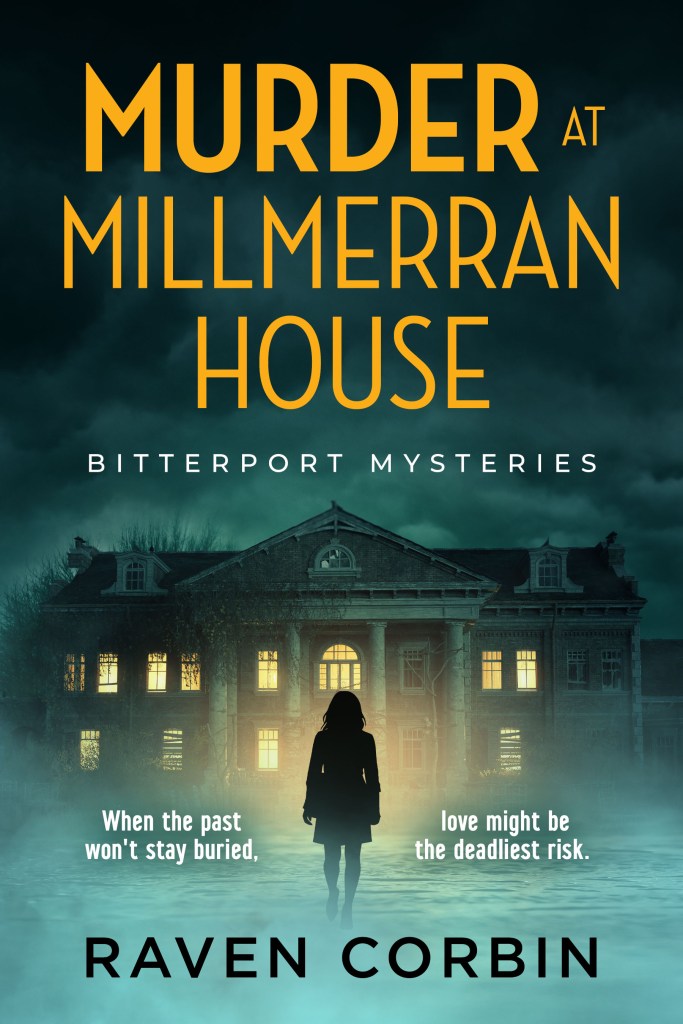
Murder at Millmerran House – Raven Corbin – Release Day 24.06.26
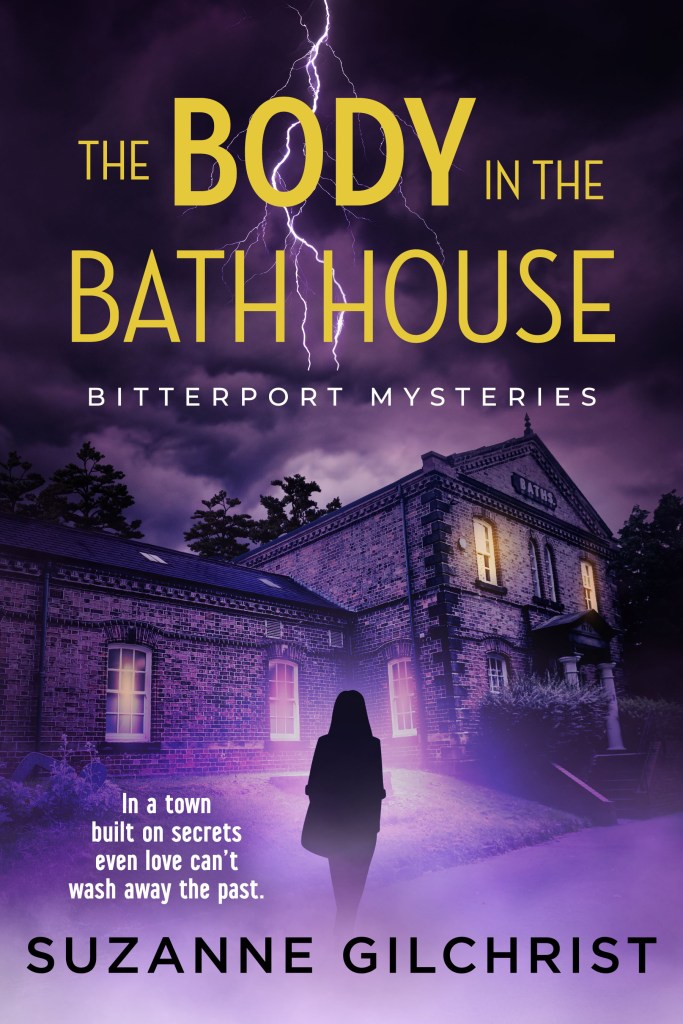
The Body in the Bath House – Suzanne Gilchrist – Release Day 29.06.26
Notes from Mr Bones
This Week in Bitterport
Right. Where to start? It’s been an enormous week, by Bitterport standards — which, to be fair, is a low bar, but still.
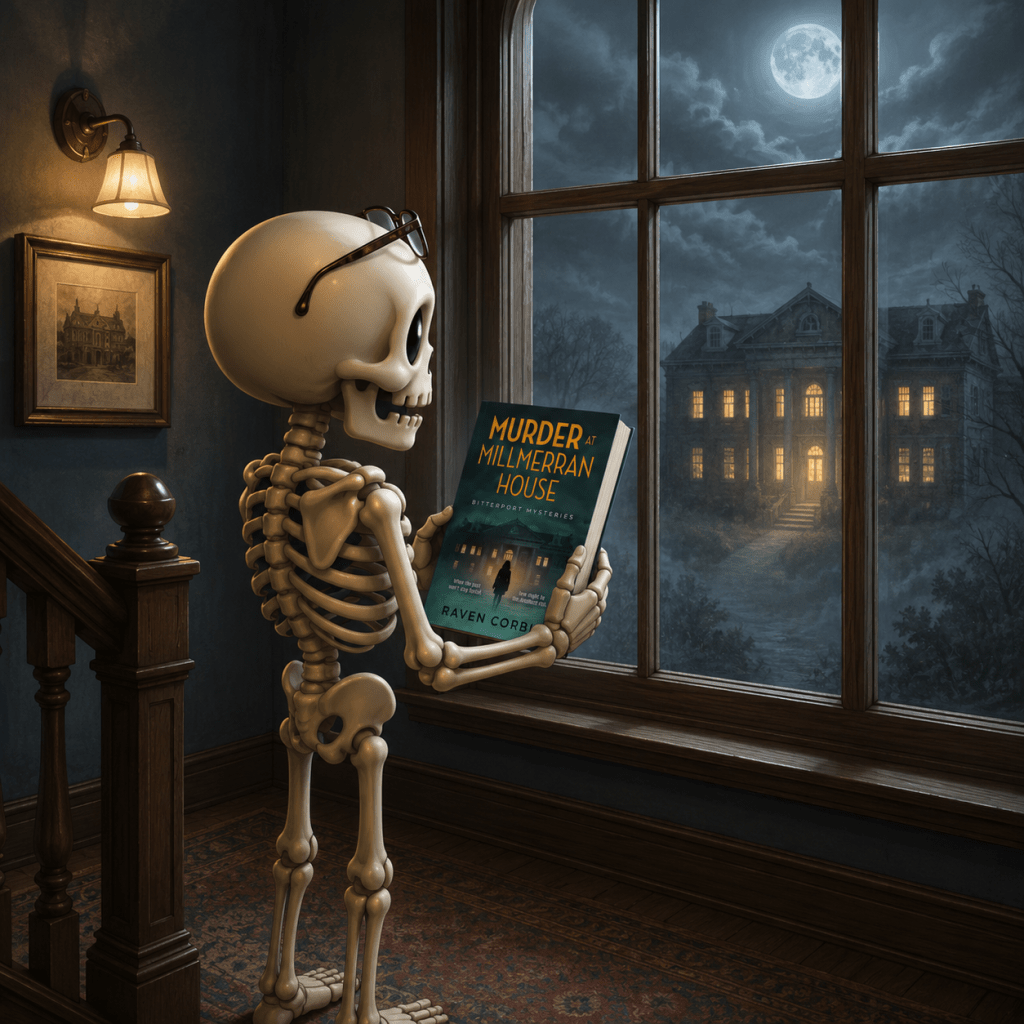
Millmerran House
The wallpaper situation has, as predicted, escalated. Elvira’s not happy. But she’s been unhappy for eighty years, so really who am I to comment on her latest attempt to attract attention? With a ghost hunter in town, she has high hopes that finally someone will listen.
And the ghost hunter isn’t the only one new in town. I might have to give up my spot at the landing window. George has hunted down the new owner of Millmerran House and he’ll be bringing him around for a walk through the old place. Ha! We’ll see what Elvira thinks about that!
And yes, before anyone asks, the house is hiding more skeletons in the closet than just little old me. I’ve been asked not to share those secrets yet. You’ll have to wait to read about them when the book comes out.
Meanwhile, Across Town
I happened to be passing the old Seacrest Bath House the other day — passing, mind you, not loitering. There’s a difference. I couldn’t help but notice the door was open. I overheard George on the phone. Now, I’m not sure if he was speaking to someone named Mercy or calling for mercy, but I’m a skeleton so there’s not much I can do. Anyway, I found the whole conversation extremely odd and also extremely exciting because no one has been inside that place for years.

A Bit of History, Because I Have Time
Did you know the old Turkish bathhouse ran for over forty years before it closed — separate bathing days for men and women, very civilised — from 1871 right up until 1913, after which it became a warehouse, then some flats that never got finished, on account of (and I quote the historical society directly here) “a series of unexplained accidents.”
Nobody has ever told me what kind of accidents. I have thoughts about this too. It’s been a big week for thoughts.
The Mail
I checked the mail today, and there was the letter from dear old Victoria to George. I do often wonder if those two ever had a thing going. They do seem like the perfect pair, but who knows? And with Victoria’s villainous connections, it’s probably better she remains anonymous as per her request. But if you’d like to read her letters, she wrote one last week.
What I’m Reading
Three books deep at the moment, which is normal for me. I’ve been told — repeatedly — that I’m not allowed to review Murder at Millmerran House (even though I’ve read it a thousand times!) because it would be conflict of interest because I live here in Bitterport. But thank goodness for Goodreads, because that’s where you’ll find what readers think.
What I can say: if you like a mansion, a mystery, and a ghost with very strong opinions about renovation choices, you’re going to have a good time.
That’s all. That’s everything. I’ve said too much already.
Until Next Week
Nine days until the doors to Millmerran House open. I’ll be here. I’m always here. It’s Bitterport. Where else would I be?
— Mr Bones
PS: I heard a rumour about the old Bitterport Savings Bank too! More about that later…
Murder at Millmerran House – Raven Corbin – Release Day 24.06.26
The Body in the Bath House – Suzanne Gilchrist – Release Day 29.06.26
Letters from Bitterport
The First Bequests – Bitterport Mysteries

My Dear George,
I owe you an apology for my last letter, which I am told arrived in something of a state. I maintain that the dampness was already present when I sealed the envelope, and is entirely the fault of the Tasmanian weather rather than any carelessness on my part. You may disagree, but as I am paying your invoices, I suggest you do so quietly.
Down to business.
I have been doing more research. I say “more” as though it has been a pleasant hobby rather than the consuming, occasionally distressing excavation of one’s own family history that it actually is. My grandfather, George. I cannot believe the things I have found. If half of what I have read is accurate — and I’m quite certain it is, because I have cross-referenced every source three times and also because it is exactly the sort of thing he would have done — then the Carruthers name owes a debt to this town that could keep us both occupied until we are considerably older than we already are.
Which brings me to the properties.
Millmerran House has sat empty for eighty years and I have decided that this is no longer acceptable. I have identified a potential beneficiary — you will find the full research in the enclosed notes — and I want you to begin the process of transfer. There are conditions, which I have outlined in the attached document. I want him to renovate it properly. And I want Marielle McGregor involved. Her family’s connection to this matter is not incidental, and it is time that particular thread was followed to its end.
You will have thoughts about this plan. You always do. I ask only that you express them briefly and then do it anyway.
I remain, as always, grateful for your patience and slightly exasperated by your caution.
Yours in perpetual conspiracy, Vic Cx
P.S. — If anyone in Bitterport asks who is behind these transfers, you know nothing. You are a very dull man from Hobart who deals exclusively in routine property law. Practice looking bored.
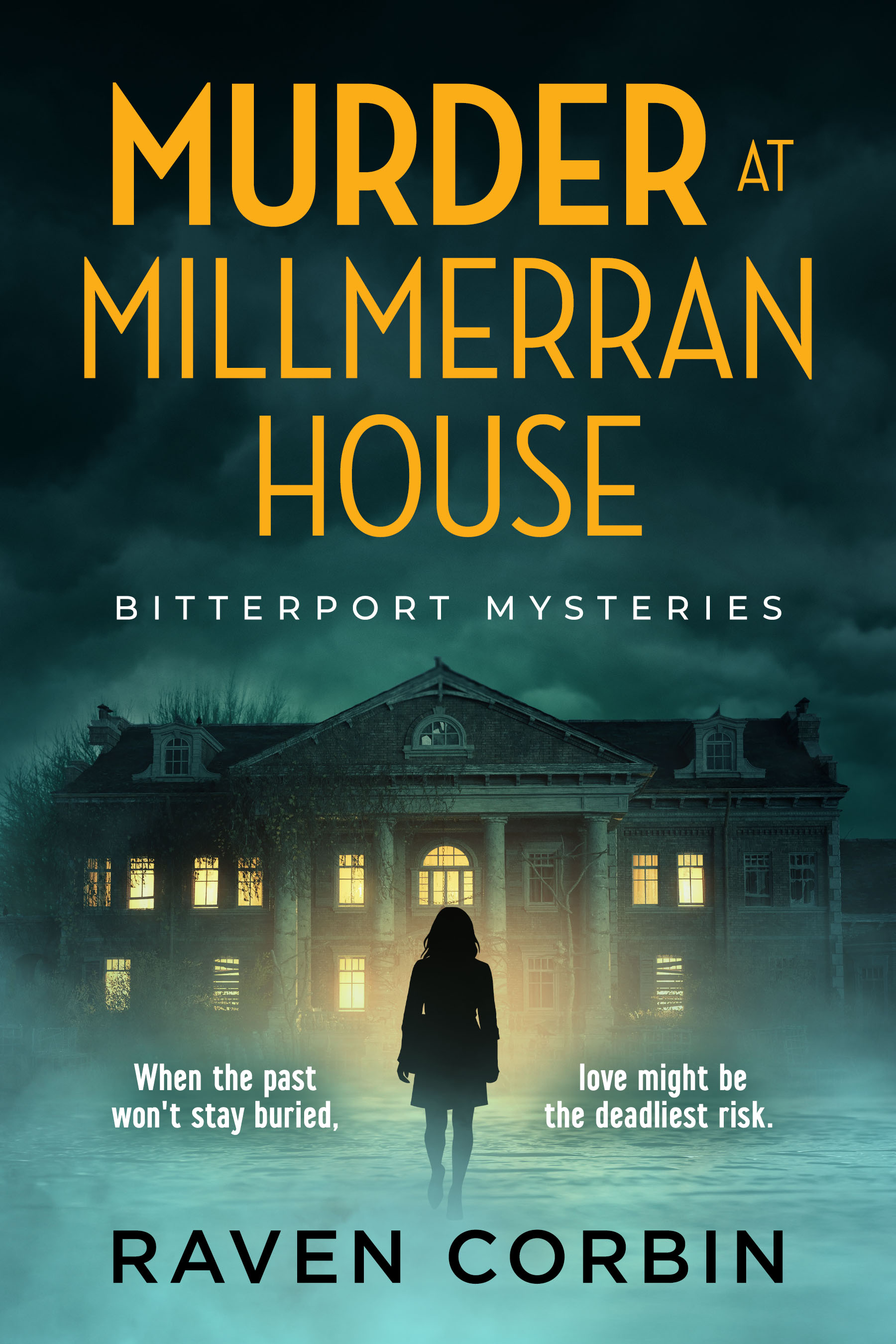

Murder at Millmerran House – Raven Corbin – Release Day 24.06.26
The Body in the Bath House – Suzanne Gilchrist – Release Day 29.06.26
The Lawyer with the Interesting Briefcase
There is a man in Hobart named George Denakis.

He is in his mid-seventies. He has been practising property law in Tasmania for most of his adult life. He wears a newsboy cap and is weathered. He is not, at first glance, a remarkable man.
At second glance, he is one of the most interesting people in this series.
For many years, George has been the sole legal representative for an anonymous client whose identity he protects with rigour, and whose instructions he carries out with a care and thoroughness that goes well beyond the requirements of his retainer. His client is distributing properties across Bitterport, Tasmania. Not selling them, giving them away. To individuals who have been researched and selected for reasons that are not always obvious.
Each transfer comes with conditions. The recipients cannot sell for a specified period. Some have additional requirements to renovate, preserve, or investigate. Nobody in Bitterport quite knows who is behind the transfers, or why, or what the endgame is.
George knows. And he’s not telling.
This alone would make him interesting. But George Denakis has a personal reason for his investment in Bitterport’s history. One that goes back generations, to a woman who died in 1945 under circumstances that have never been explained.
George never met his grandmother. He knows her story through fragments: a name, a date, a family whisper that eventually became silence. He has spent a lifetime trying to piece together what really happened to Elvira Brown.
He is getting closer to the truth.
I love George. In a story populated by people doing their best in difficult circumstances, he is the one doing it most reliably. He carries his grief with dignity, executes his client’s wishes with integrity, nurses a private heartbreak that he does not impose on anyone else.
He deserves to find what he’s looking for.
Whether he does is a story for the books.
Murder at Millmerran House releases 26 June. Cover reveal coming soon.
Raven.

Every Good Mystery Needs a Villain

This One Has Been Dead for Eighty Years.
Arthur Carruthers was born in 1890 to one of Bitterport’s most prominent families. His father Percy was the local magistrate, a man of law and order, who had watched his wife die in childbirth. Arthur grew up in the shadow of that punishing grief. He watched his father preside over trials, take bribes that were never officially acknowledged, and learn that justice, in a remote and isolated town, often went to the highest bidder.
He was, in other words, an excellent student.
By the time Arthur reached adulthood, Bitterport’s mining boom had ended and the town was struggling. Where others saw crisis, Arthur saw opportunity. He quietly acquired failing properties. He ran loan sharking operations that targeted desperate families and stripped them of what little they had left. He developed a gambling addiction that required increasingly reckless criminal enterprises to sustain.
He was charming, too. That’s important. The most dangerous people almost always are.
When World War II arrived and munitions contracts made fortunes available to those willing to cut corners, Arthur was perfectly positioned to exploit them. He built a factory. He hired workers. He evaded taxes, smuggled arms, and implemented safety practices so negligent that his own family pleaded with him to change course. He refused.
On June 17, 1943, the factory exploded. Arthur Carruthers died in the blast, along with numerous workers and the last of Bitterport’s hope for recovery.
He never faced a courtroom. He never made restitution. He never, as far as anyone knows, expressed a moment of genuine remorse.
But the story doesn’t end there.
Arthur Carruthers left behind property. A great deal of it. He left behind a web of crimes that had touched nearly every family in Bitterport. And he left behind a legacy that the next generation would carry, and the generation after that.
Some legacies demand to be dismantled.
That dismantling is at the heart of the Bitterport Mysteries. The properties Arthur Carruthers spent his life accumulating are being returned to the families he wronged, the descendants of people he destroyed, and the town he helped to kill is coming back to life.
By whom? That’s a question you’ll have to read the books to answer.
Arthur Carruthers is dead, and has been for eighty years, but the legacy he left behind lives on.
Murder at Millmerran House releases 24 June.
Raven

The Town That Time Forgot
History of Bitterport, Tasmania

Every mystery needs a setting that earns its place. Not just a backdrop, but a world with its own heartbeat — its own wounds, its own long memory.
Bitterport is that world.
It is a fictional town, and you won’t find it on a map of Tasmania. But it is built from the bones of real history and geography. I want to introduce you to it before the first book arrives, because once you understand what Bitterport has survived, you’ll understand why it refuses to let go of its secrets.
It began as a whaling station.
In 1812, on a peninsula jutting into the Southern Ocean, a small settlement took root. At its peak, Bitterport was a proper town with 582 residents, three wharves, a sawmill, a savings bank, the Seacrest Turkish Bath House, accommodation, a church, and a school. The kind of place where people built lives and expected futures.
Nineteen kilometres offshore, visible on clear days, Ada Island loomed over everything. Between 1814 and 1851, that island served as a convict settlement for prisoners transported from Britain who worked in Bitterport’s processing facilities and built many of the town’s early structures.
That history does not simply disappear when the convict era ends.
Then the mine came. Then the mine closed.
By the 1870s, coal had been discovered, and Bitterport boomed again. A railway was built through dense forest. New buildings went up. Doctors and teachers arrived. The Seacrest Bath House thrived.
Then in 1905, an underground fire killed several miners, and the Mount Elbio Coal Mine closed permanently the following year. The people who had come for the work left again. The buildings stayed.
And then came Arthur Carruthers.
I’ll have more to say about Arthur in a future post. Much more, because Arthur deserves careful attention. But for now, suffice it to say that when World War II brought lucrative munitions contracts to this already-weakened town, it also brought Arthur’s own brand of catastrophe. On June 17, 1943, his munitions factory exploded.
Bitterport never recovered.
By the time the stories begin, the population has dwindled to a handful of stubborn souls. The wharves are falling apart. The main street is overgrown. The Seacrest Bath House is boarded up and has been for decades, following a series of accidents that nobody could quite explain. Millmerran House — the grandest of Bitterport’s colonial mansions — has stood empty for eighty years.
And yet. Bitterport persists. Its buildings stand. Its history demands attention.
Something else persists too.
Beneath several of Bitterport’s historic buildings, there are tunnels. Nobody built them for official purposes, or if they did, no official records exist. Smugglers used them once. Others after that. Where they lead, and what they still conceal, is the BIG question.
Someone has recently begun distributing Bitterport’s properties to new owners, anonymously, with specific conditions attached to each transfer.
Someone with a long memory, and a very complicated conscience.
Stay tuned for more from Bitterport …
Murder at Millmerran House — the first Bitterport Mystery — releases 26 June. Subscribe to the newsletter to receive exclusive behind-the-scenes history and character introductions in the weeks before release.
Meet the Authors of Bitterport Mysteries
Welcome to the Dark Side
Meet Raven Corbin
Hello, mystery lovers.

Pull up a chair. The fire is lit, the candles are burning, and somewhere outside, the Tasmanian wind is howling through the trees. You’re in exactly the right place.
My name is Raven Corbin, and I write atmospheric Gothic mysteries — stories set in places where the past refuses to stay buried, where crumbling buildings hold secrets older than memory, and where the line between what was and what is grows beautifully, dangerously thin.
If you’ve wandered in from the contemporary romance world of Juanita Kees, welcome. You’ll recognise the things I care about most: complex characters, authentic emotion, relationships that feel earned rather than convenient. You’ll just find rather more ghosts in my stories, and somewhat fewer coffee dates.

And if you’ve found me cold — stumbled across this site while hunting for your next mystery obsession — welcome to you, too. You’ve come to exactly the right corner of the internet.
What is this place, and why does it exist?
Every writer carries multiple worlds inside them. Juanita Kees has spent years writing about people finding love and connection in the bright, breathing present tense. I’ve always been the part of her that stares at old photographs a little too long, that wonders about the woman in the portrait whose eyes follow you across the room, that reads local history books and thinks: but what really happened?

What you can expect from me:
• Stories that take a real, specific, historically grounded place — Tasmania, and one extraordinary forgotten town called Bitterport — and treat it with the seriousness its history deserves. Tasmania has a colonial past that is by turns remarkable, brutal, and deeply strange. The Female Factory system. Convict transportation. The tiny communities that clung to cliff-edges and survived — or didn’t. I find that history irresistible, and I intend to explore it through every book in this series.
• Stories where romance is not an afterthought. I’ve inherited Juanita’s conviction that love — the complicated, slow-building, worthy kind — belongs in every story. My characters will fall for each other while they’re solving murders and outrunning danger, and it will feel absolutely real.
• Stories where women who have been silenced by history finally get to speak. Some of my favourite characters have been waiting a very long time to tell their stories. I take that responsibility seriously.
• Stories where the supernatural is never decorative. If a ghost appears in one of my books, she has something to say and she will not be ignored.
Coming 26 June: Murder at Millmerran House — Book 1 in the Bitterport Mysteries

The first story I have to tell is set in a crumbling Victorian mansion in an almost-abandoned Tasmanian town, and it involves a body in a chimney, a 1945 disappearance, stolen wartime gold, and one of the most formidable women I have ever had the pleasure of writing — even if she has been dead for eighty years.
More details coming soon, including the cover reveal you won’t want to miss.
In the meantime, subscribe to my newsletter. I promise it will be worth your time — I have some extraordinary stories to share about the history behind this series, and a character or two you’ll want to meet before the book drops.
Welcome to Bitterport. Mind the shadows.
Raven x
Who is Elvira Brown?

That is a question Aiden Bellingan is desperate to find the answer to.
When British hotelier, Aiden Bellingan inherits a rundown mansion in Bitterport, his plan is to renovate it into a boutique hotel. Given the derelict state Millmerran House is in, he’s expecting some challenges. He’s not expecting one of those challenges to be the ghost of the brothel madam who’d once run the place. To achieve his dream, he needs to do two things – hire a renovator and uncover the mystery that keeps Elvira Brown treading the stairs at night.
Marielle McGregor’s father is missing, last seen at the fated Millmerran House. Millmerran’s walls have seen murder, mayhem, bootlegging and much, much more. Her father’s disappearance is just one of the mysteries to solve. So when she’s offered the job of renovating the old house, it’s the perfect opportunity to look for clues the police may have missed and solve not one, but two mysteries. The question on her mind is who will bring the most trouble – the handsome new owner or the ghost of Elvira Brown?
Coming soon: A debut novel from Raven Corbin, Murder at Millmerran House, Book 1 in the Bitterport Mysteries Series.

